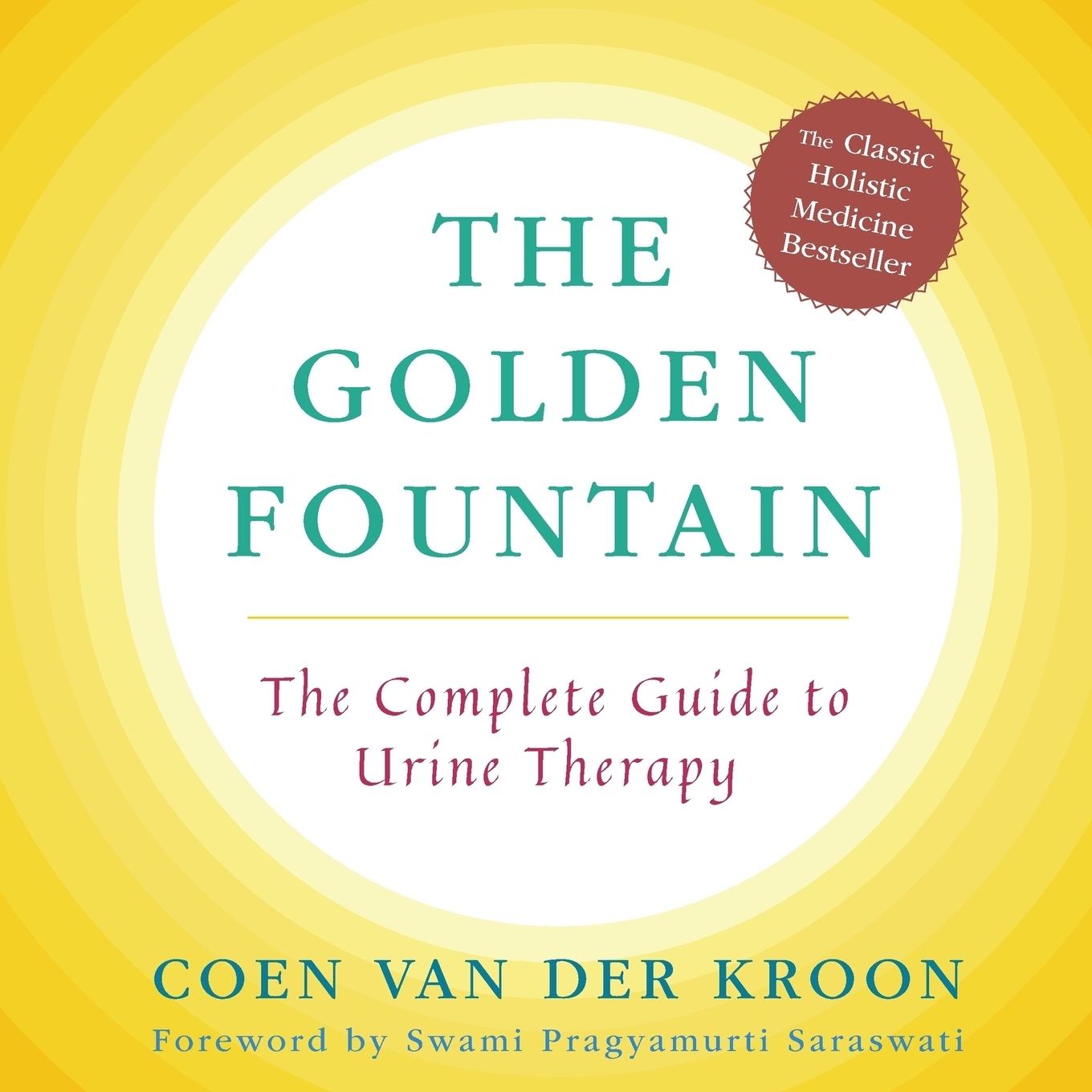
The Golden Fountain: The Complete Guide to Urine Therapy by Coen van der Kroon stands as the definitive modern text on uropathy, a practice that bridges the gap between ancient esoteric traditions and a contemporary quest for biological self-sovereignty. Van der Kroon’s work is less a medical textbook and more a manifesto for health autonomy, aiming to dismantle the profound cultural taboos surrounding a substance that the human body produces naturally and incessantly. The book posits that the modern aversion to urine is a learned psychological construct rather than a biological reality, arguing that by reclaiming this "waste product," individuals can tap into a personalized, cost-free pharmacy that is perfectly calibrated to their specific physiological needs.
At the heart of Van der Kroon’s thesis is the historical and cultural contextualization of urine as a sacred substance. He draws heavily from the Shivambu Kalpa Vidhi, an ancient Sanskrit text that forms part of the Damar Tantra. In these Vedic traditions, urine is referred to as Shivambu, or the water of Shiva, and is considered a purifying nectar capable of facilitating both physical healing and spiritual enlightenment. Van der Kroon does not limit his scope to the East; he meticulously tracks the use of urine therapy through the annals of Egyptian medicine, where it was utilized for wound care, and into the folk traditions of Europe and the Americas, where it served as a versatile remedy for everything from toothaches to agricultural accidents. By establishing this global lineage, the author seeks to provide the reader with a sense of historical continuity, suggesting that our current "disgust" is a modern anomaly in the broader arc of human civilization.
The biological argument presented in the book hinges on a fundamental redefinition of what urine actually is. Van der Kroon goes to great lengths to debunk the misconception that urine is a toxic sludge of bodily filth. Instead, he explains that urine is the result of blood filtration performed by the kidneys. It is, essentially, a derivative of blood plasma. During the filtration process, the kidneys retain what the body currently requires and excrete the excess. This includes water, minerals, vitamins, enzymes, and hormones that the body simply did not have the immediate capacity to utilize. Therefore, urine is not "dirty" in the traditional sense; it is a sterile, nutrient-rich liquid containing a "snapshot" of the body’s internal state. Van der Kroon emphasizes that even urea, the namesake component of urine, is a powerful medicinal compound with anti-viral and anti-fungal properties, often found in high concentrations in expensive commercial dermatological products.
One of the most compelling concepts introduced in the book is the theory of the biological feedback loop, which Van der Kroon describes as a form of natural, internal vaccination. When an individual is suffering from a specific ailment—be it a viral infection, a bacterial imbalance, or an autoimmune reaction—the urine contains minute signatures of those pathogens or the specific antibodies the body has produced to fight them. By re-ingesting the urine, the individual introduces these antigens back into the system through the mucous membranes of the mouth and throat. This triggers the immune system to recognize the threat more clearly and mount a more vigorous and targeted defense. Van der Kroon suggests that this isopathic effect allows the body to create its own customized medicine, one that is more precise than any mass-produced pharmaceutical could ever hope to be.
Beyond its role as an immune stimulant, the book explores the hormonal and enzymatic benefits of the practice. Urine is a significant source of melatonin, DHEA, and various growth factors. Van der Kroon discusses the implications of recycling these substances, particularly for those suffering from chronic fatigue or sleep disorders. He argues that the modern lifestyle, characterized by high stress and environmental toxins, often leaves the body in a state of hormonal depletion. Urine therapy serves as a conservation mechanism, allowing the body to reabsorb vital chemicals that would otherwise be lost. The presence of urokinase, an enzyme capable of dissolving blood clots, is also highlighted as a reason for the practice’s purported cardiovascular benefits.
The practical methodology outlined in the book is divided between internal and external applications, each with its own specific protocols. For internal use, Van der Kroon recommends the "mid-stream" technique, where the beginning and end of the flow are discarded to ensure the sample is as pure as possible. He suggests starting with small amounts and gradually increasing the dose as the body adjusts. More advanced practitioners may engage in urine fasting, a process where only urine and water are consumed for several days. This is described as a powerful tool for systemic detoxification, forcing the body to recycle its internal resources and undergo a deep cellular "reset." Externally, the book advocates for urine massage and compresses. Van der Kroon notes that "old" urine, which has been allowed to sit for several days, develops a higher ammonia content. While this makes it more pungent, it also increases its ability to penetrate the skin and treat chronic conditions such as psoriasis, eczema, and fungal infections.
Case studies and anecdotal evidence form a significant part of the book’s persuasive power. Van der Kroon catalogs a wide range of successes, from the resolution of minor skin blemishes to the management of debilitating autoimmune diseases. He recounts stories of individuals who, having exhausted the options provided by conventional medicine, found relief and restoration through this unconventional path. While these stories are subjective, they are framed within the context of the body’s innate wisdom. The author does not claim that urine therapy is a magic bullet that functions in isolation; rather, he presents it as part of a holistic lifestyle that includes proper nutrition, physical resilience, and a mindset of self-reliance.
A recurring theme throughout The Golden Fountain is the intersection of health and philosophy. Van der Kroon posits that the adoption of urine therapy is a radical act of rebellion against a centralized medical-industrial complex that profits from human illness. By utilizing a substance that is entirely free and self-produced, the individual breaks their dependency on external providers and takes full responsibility for their own well-being. This philosophy of self-sovereignty is deeply resonant with those who value "anti-fragility" and the ability to thrive outside of mainstream institutional support. The act of drinking one’s own urine is described as a psychological breakthrough—a confrontation with one’s own mortality and biological reality that leads to a state of profound self-acceptance.
Van der Kroon also addresses the importance of the individual’s internal environment. Since urine is a reflection of the blood, its quality is directly tied to diet and lifestyle. The author warns that a diet high in processed foods, excess salt, and chemical additives will produce urine that is bitter and potentially taxing for the body to re-process. He encourages practitioners to view their urine as a diagnostic tool; its color, scent, and taste provide immediate feedback on their current health status. This creates a heightened state of biological awareness, where the individual becomes intimately tuned into the consequences of their choices.
The book does not shy away from the practical difficulties of starting the therapy. Van der Kroon acknowledges the "yuck factor" and provides strategies for overcoming it, such as diluting the urine in fruit juice or starting with external applications to build familiarity. He emphasizes that the resistance most people feel is not a natural instinct but a cultural conditioning. In many ways, the book serves as a deprogramming manual, systematically peeling back layers of social shame to reveal a biological truth that has been hidden in plain sight for centuries.
Regarding safety, the author provides clear guidelines on when to exercise caution. He notes that while urine is generally sterile and safe, those on heavy pharmaceutical medications must be careful, as the kidneys excrete drug metabolites that could reach toxic concentrations if repeatedly recycled. He also discusses the role of the kidneys as filters, clarifying that they are not "dumping" poison, but rather maintaining the precise balance of the blood. If the blood itself is heavily contaminated by external toxins or drugs, the urine will reflect that. Therefore, the practice is most effective when paired with a clean, nutrient-dense diet and a commitment to minimizing environmental toxins.
Ultimately, The Golden Fountain is an invitation to explore the "inner alchemy" of the human body. Van der Kroon’s legacy is the popularization of a practice that allows the individual to become their own doctor, their own pharmacist, and their own spiritual guide. The book concludes with a vision of a world where people are no longer afraid of their own biology, but instead view it with awe and respect. By embracing the "golden fountain," the individual completes a circle of life that begins and ends within themselves, achieving a level of independence and resilience that is increasingly rare in the modern world. It is a work that challenges the reader to look inward for the solutions to their most pressing health concerns, suggesting that the most powerful medicine in existence is not found on a shelf, but is already flowing through our veins and kidneys, waiting to be recognized and utilized.
The Breath of Resilience: Harnessing Nasal Mechanics and Thermal Adversity
A Journey through Biological Intelligence and the Architecture of Human Survival
Before I delve into the specific physiological shifts triggered by extreme cold, I must highlight the fascinating biological alchemy found in nasal breathing. Your nasal passages actually synthesize a gas known as nitrogen oxide, or nitrous oxide. While many recognize this as the laughing gas used by dentists or the nitrogen that powers high-performance vehicle engines, it serves a critical, complex role within the human body by opening up your blood vessels. Because your nose naturally creates this gas through the biological combinations within its cavities, becoming a dedicated nasal breather allows you to maximize your intake of this substance rather than exhausting it through your mouth.
This process becomes particularly potent during the Wim Hof technique; when you hold your breath after a series of deep cycles, you are building up a concentrated reservoir of nitrous oxide in your nasal passages. When you finally inhale through the nose, that buildup rushes into your system, dilating your lungs and vascular channels to enhance gas exchange and athletic performance. Beyond these chemical benefits, regular nasal breathing simply makes you think better and feel more relaxed, as it moves you toward a more efficient, rhythmic exchange of oxygen and carbon dioxide.
When you combine these breathing techniques with cold therapy, you witness the body’s innate intelligence in real-time. Upon initial exposure to the cold, your body responds reflexively by closing off blood vessels in your outer extremities. This is a strategic withdrawal of resources to preserve your vital organs—your heart, lungs, liver, and kidneys—which must remain at a stable temperature to regulate nutrition and fluids.
The body prioritizes its abdominal core, from the hips to the neck, often leaving your hands and feet feeling numb as it redirects blood flow to save your life. I view this as a manifestation of our three-part nature: the soul, which is the animating feature; the physical grit self; and an energetic twin or electromagnetic field that guides our growth and remains even if a limb is physically lost. Our bodies are anti-fragile gifts that perform these life-saving programs—breathing, pumping blood, and digesting—without any conscious effort on our part.
My own experimentation with cold rocks and freezing water has shown me how we can maximize these survival programs. In cold water, movement is often counterintuitive; if you can relax and tread water slowly, you actually create a multi-temperature bubble where your body heat warms the layers of water closest to your skin.
I experienced a similar battle of temperatures while standing on a frozen rock. Initially, my feet turned white as the blood withdrew to my core. However, once my body realized the exposure was limited, it reversed course and engorged my feet with blood until they turned deep red. By repeatedly cycling through this process of disgorging and regorging blood, I actually trained my system to become more efficient, eventually growing more visible capillaries, veins, and arteries in my feet to handle the thermal demand. This adaptive capacity for increased blood flow occurs anywhere you apply cold treatment.
Conversely, managing extreme heat, such as in a sauna, requires a different set of survival tactics focused on protecting the brain. To prolong a beneficial heat experience without risking brain damage or passing out, you must keep your head cool. I have found that pouring ice-cold water over my skull and the back of my neck allows me to endure high temperatures longer by cooling the physical bone and the blood flowing to the brain. Whether you are facing heat or cold, the ultimate goal is to move past the initial mental or physical "freeze" and make active, calculated decisions to assist your body’s natural programming. By practicing these methods, you develop the ability to think on your feet during a crisis, ensuring that you are not just a passenger in your body, but an active collaborator in your own survival.
Full text:
One last thing before I get into what the cold actually does to your body and physiologically changing it is that there's a really fascinating thing with nasal breathing. Your nose, your nasal passage actually creates, it synthesizes what's called nitrogen oxide, nitrous oxide gas. This is the laughing gas that you get from the dentist if they're giving you a treatment. They give you laughing gas. It's also the nitrogen that goes into engines for vehicles to make the engines very, very powerful. Nitrogen oxide is actually useful in the human body though because it actually opens up your blood vessels. It has multiple different functions that are all throughout the body and it's very complex. But what's important to understand is that your nose naturally creates nitrous oxide through the process of its nasal cavities and these complex biological combinations. It synthesizes nitrous oxide and has it ready for you to breathe in, but you can only breathe it in through your nose.
So by becoming a nasal breather, you're maximizing your intake of nitrous oxide. By breathing only through your nose, you're intaking all that nitrous oxide rather than exhausting it by breathing through your mouth and out through your mouth. Now, what's interesting is when you actually hold hold your breath. So when you're doing the Wim Hof technique, where you're doing the 30 breaths in, 30 breaths out, and then you breathe out completely and then hold your breath. When you hold your breath, you're actually building up nitrous oxide in your nasal passage. So when you're ready to breathe in, when you open your nose and you... breathe in through your nose, you're actually inhaling all of that nitrous oxide that was built up in your nasal cavity. And what it does, it opens up your lungs and it opens up your blood vessels in your system. It actually goes through your vascular system and starts opening up all the channels. It has a very interesting effect to increase athletic performance.
So when you're combining the Wim Hof breathing with the nasal breathing, you're actually getting nitrous oxide into the gases in your lungs that then pass on through the gases in your vascular system. There's multiple different benefits to this, but this is a really fascinating thing when you start studying how the body works and this interesting way of, you know, the benefits of nasal breathing, right? So when you start getting into the nasal breathing, number one is a general practice, just keep your mouth shut unless you're You're talking, eating, or drinking. Simple as that. When you start actually getting the nasal breathing reflexively, you start thinking better, feeling better. You're more relaxed. You actually have better oxygen exchange with carbon dioxide. You're actually more efficiently changing gases because you're breathing less. Rather than breathing, say, 40 times a minute, you end up breathing only 25 to 20 times a minute. But each time you're breathing, you're more efficiently inhaling and exhaling. Inhale, pause, exhale. Inhale, pause, exhale.
You're doing this rhythmic breathing that helps you efficiently exchange gases, which is the point of breathing. People forget what the point of breathing is. You have to remember what the point is and then maximize the efficiency of it. So when you're combining Wim Hof breathing with nasal breathing, you're actually getting the benefit of not only increasing the gas exchange in your lungs, but you're increasing the amount of intake of nitrogen oxide, nitrous gas, that actually increases your capacity for your lungs to open up more. It actually increases your ability for your veins and arteries to open up more, your capillaries all open up more. It has a net benefit. Now, what ends up happening is when you start doing cold therapy, your body goes through several changes. When you first experience the cold, your body responds reflexively. And the first thing it does is it closes off the blood vessels and the outer extremes of your body. And the idea here is that your body needs to preserve the organs, which is your heart and your lungs, your digestive organs. Those need to be working properly for you to be able to live, right?
You need to actually have a functioning liver. You need to be able to process material going through your system. Your kidneys need to work. If your kidneys and liver are not working properly, you're not going to be regulating the amount of nutrition through your system. You're not going to be regulating the amount of fluids, your mineral salts, all that stuff's going to be able to wax. Your body, as a reflex, when you're exposed to cold, pulls in its priorities and blood flow to the core of your system, which means your abdominal core. From your hips to your clavicle or your neck, right? From your hips to your neck is where the blood flow goes to. So basically your body withdraws most of the blood and concentrates it in a very curious way into the organ cavity. This is the priority for your body. So initially, when you're exposed to cold, that's what your body does. So your extremities actually go kind of numb. Your hands and your feet go numb. Why? Because there's not getting much blood flow. There's still getting blood flow, but not much because your body's redirecting the blood to where it thinks it needs to go to prioritize saving your life. If you die, your body dies, right? Your lights go out, you're gone, your body disintegrates.
This is how it works. So your body is constantly trying to keep itself alive and you alive because you are not your body. Your body is part of you. And my particular philosophy on this is that we are born, right, when we are created, when the egg meets the sperm, there's a moment of creation, a spark of life, where your soul is seated in that moment. That single-celled organism is you, all of you, in that moment. Everything you're going to be is there as a potential when your spirit is seated within you. The cell, the single cell, which is a combination of the egg and the sperm. Together, when the spark of life hits, boom, that's you. And from that moment, expanding out from you is an electrical field that is the extension of you. And then there's the spirit of you, which is within it. The spirit of you is the animating feature, but the... the electrical field that goes out actually helps develop the organic matter that becomes you as you develop from a single cell to two cells to four cells to eight cells, and you keep splitting until eventually you become your full-grown adult self.
What's important to understand is that these three parts of you, which is your soul, which is the animating feature, then there's the electromagnetic field, which is that that electromagnetic body of yours that actually designates where things are going to grow. As an example, if through a thing called cerulean photography, you can actually have your arm cut off. You have no arm, you're an amputee of your arm, right? And they can actually put your arm where it should be onto a cerulean photography plate and take a photograph and they can trace out exactly where your arm was. They can actually, you can actually see with the veins, the arteries, the, um, The electrical components, the chakra points is all still there. Energetically, it's still there. You're physically missing the limb, but your energetic self is still there. So that's why your energetic self, your energetic twin is never gone. It's just not visible to the human spectrum of your eyes to be able to see and all that stuff. So we have this very complex relationship going on in our bodies where we have this physical grit self that are made of cells and physical matter. Then we have the energetic twin that is the animating feature that actually decides where we're going to grow to, what our dimensions are going to be, the physical capacities of our physical self.
Then there's the soul, which is the animating feature. When your soul is gone, you're gone. Now what's interesting is when you start thinking of the your body in this way it's a three-part system you start realizing that way that actually makes sense when your body starts acting within adversity as in you're dropped into a cold water what do you do your body immediately starts pulling all the heated blood to its core and starts prioritizing that to survive because if you die it's not going to matter anymore right it's over lights out you're gone you pass on. So your body's prioritizing the things that matter. The other thing is that even if your heart doesn't stop, or your lungs don't stop, or your brain doesn't stop, you still have to continue processing with organs. You need your liver and your kidneys to be able to process the fluids to make sure You actually stay in balance even after the event. So your body's prioritizing not just short-term, but long-term thinking, long-term intelligence that is happening by default. It's your default programming. This is your gift from God. You have an anti-fragile body that is trying to survive no matter what. You don't have to be consciously doing. You don't have to consciously be breathing for your body to be breathing. You don't have to be consciously pumping blood for your body to be pumping blood. You don't have to be thinking of digestion for your body to do by digesting food. See how this works?
So it has its own innate intelligence, its own predictive programming that is within there that actually runs programs. When you start understanding these programs, you can work with it and capitalize or maximize these situations. So... What happens is when you get immersed in cold water, your body withdraws most of the blood flow to the core to survive and so your limbs go numb. Your hands and your feet go numb and then your forearms and your calves will go numb and then your thighs and your biceps will go numb until eventually the only thing left is your core. Now, the key is when you're in cold water is that the water does not remain cold in perpetuity. The fact that you are warm changes the temperature of the water around you. This has been measured with tests that have been done with Wim Hof and others, where if you actually get into freezing cold water and are able to just tread water, just keep your head above the water or float, right? When you can slow down your movements, it's counterintuitive because you think that, oh, if you're in water, you want to move to get your body heat going. That is true, but not so much true.
What ends up happening is if you can relax and do your breathing and pull your arms in to like cross your arms, and tread water or float, what ends up happening is you actually create a multi-temperature bubble around you. So what happens is there's your body, your core of your body is the hottest, then your outer layer of your body is the less hot than your inner core, then the water around your body is warmed up by being close to your warm body. And then the water past that is warmed up again. So there's these layers of water that goes from warm closest to you out to coldest. And if you can actually float or tread the water without moving too much, you can actually preserve heat more than actually swimming. It's a fascinating thing. You can actually sit in cold water or warm water around you. You actually create a bubble. And when you experiment with this, you can actually sense this. You can actually feel it, right?
So I actually was experiencing this with the cold rock where I was actually paying attention to fighting the temperature of the rock. So as my feet would touch the rock, rock my feet were hot and they would touch the cold rock and then my feet would cool down but the rock would warm up and then as the rock would warm up on the surface the cold depths of the rock would start exchanging the heat from that part of the rock and then eventually there would be this battle going on between the cold rock trying to stay cold and my warm feet trying to stay warm so as my feet were warming up and the rock was cooling down or trying to you know keep cool down there's this battle going on i can actually feel these waves back and forth back and forth of the heat up and then the cool down the heat up and the cool down. And what was happening is my body was going through a defensive mechanism of, first of all, being coming in contact with cold. My blood withdrew from my feet, right? So my feet actually went completely white for a while because the blood was withdrawing from my extremities, thinking that this was an extreme situation and the blood should go to my core to preserve whatever's going on. Because my body did not know what was coming next. It didn't know if I was going feet first into water, if there's some sort of delayed reaction or there's water creeping up or whatever. My body did not know. So it was actually reacting as if this is an ongoing thing.
And then what happened was, Once we got past that point where it didn't seem like it was getting any worse and there's only one spot that was cold in my body, which is my feet, then my body reacted to this limited exposure and reversed course so what happened is my body started pumping blood to my feet and then my feet went from being white like super white and no blood to like super pink and red because my body was pumping amazing amounts of blood to my feet to warm up my feet to engorge the tissue with blood and to actually heat up my feet as much as possible. So I was actually observing this experience of my feet going totally white and pale and then feeling pins and needles as in going totally frozen, as in numb. And then the reverse where my body started engorging my feet with blood and then warming them up. But then it would reverse again because while I'm keeping my feet on this rock, the rock is fighting me because it is a big rock in frozen ground. So it is absorbing the heat and then exchanging the cold, right? So what ends up happening is my body's going through these phases of of hot and cold and hot and cold. And I would basically let it go through the cycle and then basically stop the cycle because what would happen is it would go the other direction. It would actually pull back all the blood and then as if it can't fight this thing or it's going back into survival mode.
The idea was to actually go through the process and observe the process of my feet disgorging of blood and then re-engorging of blood and then disgorging again. By doing that, it actually trained my feet to be more efficient at increasing blood flow. And this forced the tissues to disgorge and regorge with blood. And what it caused was a reaction in my system so that my body started actually becoming more efficient at this. I started actually growing more capillaries in my feet. So the capillaries of the blood vessels go between your veins and your arteries. So your arteries carry blood from your heart and your veins carry blood back to your heart. This is the back and forth where you get a one-way valve. It's going one direction from your heart or to your heart. And what ends up happening is between the blood coming from your heart to the blood coming back to your heart, there's these very small vessels in between called capillaries. The capillaries are the most blood vessels in your entire body. And they're able to actually form more ones. They actually branch off. They keep branching off and branching off, doubling and doubling and doubling until eventually they create enough of what they think they need.
So by myself doing this specific process of cooling down my feet, it caused an excess amount of capillaries to grow and then extra blood vessels larger than capillaries that I could actually see after a while. I started actually growing more veins and arteries in my feet that were actually pronounced. I mean, all over the feet from one end to the other, I could actually see the change over time as my body was responding with the need for heating up. So when your body is having a difficult time heating up, it creates more blood flow. If your body's having a hard time cooling down, it creates more blood flow. See how it actually just creates more blood flow because that's the solution. If it needs more capacity, it creates the capacity by way of creating more blood vessels. So with me, I was actually able to observe this in my feet and it'll happen anywhere in your body. Wherever you're doing cold treatment, your body will create more capillaries, more arteries, more veins. It'll actually create the capacity for blood flow that'll be increased. And this happens to your whole body.
I used to do sauna treatments where I'd go into a hot sauna and I would get so hot that I was almost feeling like I was gonna pass out. At the moment where I felt like I was going to pass out, I would go to the water faucet and I'd pour cold water on my head to cool my head down because the most important thing when you're dealing with heat exposure is your head, right? You want to not overheat your brain because you can cause brain damage. So when you're dealing with hot experiences, to prolong the ability for your body to prolong in a beneficial way a hot experience in a sauna is that you cool your head down with cold water. So I put ice cold water on my head to the point where I almost gave myself a headache, ice cream headache almost is what it felt like from cooling down my head. But by cooling down the skin and my physical skull, it cooled down my actual brain and my body was able to endure the heat longer. And then I would get back into the heat and I was able to endure it. See, there's a point where your Your body freaks out because your brain is getting too hot and it could cause brain damage.
But if you can keep your head cool, as in running ice cold water on your head and cooling down your skull, and then your brain is increasing blood flow, so you actually are exchanging gas and all that stuff. So your body is actually keeping cool then you're actually able to prolong yourself in hot temperatures. So in sauna experiences, but you have to keep your head cool. Otherwise you can cause brain damage or pass out or all kinds of stuff can be, can be negative. You have to know what's going on and how to respond to it. So I've, so that's how you deal with hot, hot treatments for long periods of time is you keep your brain cool. You keep your head cool. You pour water, cold, cold water on the back of your neck, which cools down the, um, the blood flow and everything, it actually cools down your head very quickly. You can actually feel it, right? You can actually watch the color of your skin change as this occurs.
Now, when you're in cold water, like I said, if you fall into cold water and you have to be there for a while, the idea is you cross your arms and you could tread water or float, you can actually preserve your heat longer that way. Now, if you have to actually swim to save your life, as in you have to get somewhere, well, this is where you have to actually, you have to swim. You can't just float. So, either do the old, you know, backpedal, or do whatever you gotta do to swim to get to where you need to be to get out of the water. But the point is that sometimes being active is not the best thing, other times being active is the best thing because you might only have a certain amount of time before your body locks up. If you have a certain amount of time before body locks up, then being as active as possible is the best thing. If you think you've only got three minutes before you freeze up, well then swimming towards the thing that you can get out of the water on is more important than trying to conserve some temperature for a few extra minutes. These is the kind of crisis decisions you have to make when you're practicing Wim Hof breathing and you're practicing the method of cold treatment you're able to actually make these decisions and think on your feet you're able to actually make choices and follow through with it and that's what you do you end up surviving these things by actually thinking through making decisions and acting in a way that could save your life and it can save your life the worst thing is for someone to freeze up mentally or physically and just die. There's a lot more I can say about the cold therapy, but I think this helps explain the theory a bit without making this too long... So I'm gonna wrap it up there for today.
The book "Your Golden Elixir: The Ancient Art of Urine Therapy and Its Place in Modern Medicine" provides an in-depth exploration of urine therapy (urotherapy), tracing its historical roots across global civilizations and examining its potential role in contemporary health. The following summary details its core themes, historical context, and practical applications.
### **Historical Foundations and Cultural Significance**
Urine therapy is presented as a practice with roots extending back over 5,000 years.
* **Ayurveda (Shivambu Kalpa):** In ancient India, the practice was known as *Shivambu Kalpa*, meaning "the sacred ritual of using urine for healing". *Shivambu* translates to "divine nectar," symbolizing the fluid's perceived purifying properties. It was used both topically for skin issues and internally to balance life energies (doshas) and boost the immune system.
* **Traditional Chinese Medicine (TCM):** Known as "Yellow Therapy" or "Liquid Gold," TCM views urine as a *yin* substance capable of carrying away excess heat and toxins. Practitioners analyzed its color and odor to diagnose internal imbalances, such as yang energy deficiencies.
* **Ancient Egypt and Rome:** The *Ebers Papyrus* (c. 1550 BCE) contains recipes for using urine in wound-healing poultices. Egyptians also integrated it into spiritual purification rituals and mummification processes due to its believed preservative qualities. In Rome, the physician Galen documented its medical properties.
* **Medieval Europe:** During the Middle Ages and Renaissance, "uroscopy"—the examination of urine's color, clarity, and odor—was a primary diagnostic tool for physicians. Alchemists viewed urine as a focal point for understanding the fundamental nature of matter and the human body.
### **The Science and Composition of Urine**
The book challenges the modern view of urine as mere waste, characterizing it instead as a "window into the body's health".
* **Key Components:** Urine is described as containing urea (a natural antimicrobial), hormones, enzymes, vitamins, and minerals that the body has not fully utilized.
* **Therapeutic Mechanisms:** Auto-urine therapy is based on the principle of "recycling" these beneficial substances. The text suggests that reintroducing these components can help the body reabsorb nutrients, stimulate the immune system, and support natural detoxification processes.
### **Reported Benefits and Applications**
The text details several methods of administration and various conditions that proponents claim may benefit from urotherapy:
* **Internal Use:** Typically involves drinking small amounts of fresh morning urine on an empty stomach to boost energy and detoxify the system.
* **Topical Applications:** Urine is used for skin care, treating cuts, burns, and infections due to its reported antibacterial and anti-inflammatory properties.
* **Specific Conditions:** Anecdotal evidence and some cited studies suggest potential benefits for chronic fatigue syndrome, digestive disorders (by balancing gut flora), skin ailments, and joint pain.
### **Modern Decline and Controversy**
The book attributes the decline of urine therapy in the West to several factors:
* **The Rise of Modern Medicine:** The advent of synthetic pharmaceuticals and antibiotics led to the dismissal of many natural traditions as "outdated".
* **Stigmatization:** Cultural perceptions of urine as a "waste product" have created a significant social taboo, often leading to feelings of embarrassment or isolation for practitioners.
* **Scientific Skepticism:** Modern medicine raises valid concerns regarding the lack of standardized protocols, potential for contamination, and the need for more rigorous scientific validation.
### **Practical Guidelines and Safety**
For those interested in exploring the practice, the book provides several safety recommendations:
1. **Use Fresh Urine:** It is recommended to use urine collected within the last 24 hours to avoid bacterial growth. Morning urine is often considered the most potent.
2. **Avoid Contaminants:** Individuals taking medications or consuming alcohol should avoid using their urine for therapy.
3. **Gradual Introduction:** Beginners should start with very small amounts (a few drops or a teaspoon) and gradually increase the dosage as the body adjusts.
4. **Professional Consultation:** The book repeatedly emphasizes that readers should consult with a healthcare provider before starting urine therapy, especially if they have pre-existing conditions.
In summary, *Your Golden Elixir* advocates for a "personalized healthcare" approach that respects ancient wisdom while acknowledging the need for caution and further research in a modern context.