
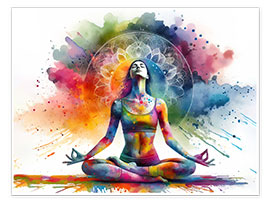
Pearl of Wisdom 1: The Body Is Not Broken
Rethinking Health Through the Lens of Internal Intelligence
Most people have been taught to think of the body as fragile, incomplete, and constantly vulnerable to breakdown. From an early age, the prevailing message is that the body requires endless external management, correction, and intervention in order to survive. Every symptom becomes a malfunction. Every imbalance becomes a defect. The individual is conditioned to distrust the body’s own intelligence and instead rely upon external systems for guidance and repair.
But what if this assumption is fundamentally incorrect?
What if the body is not a defective machine, but an adaptive, self-regulating biological system capable of restoring balance when its natural processes are understood and supported?
This question forms the foundation of the Shivambu philosophy explored throughout My Fountain of Youth. At its core, the book challenges the modern habit of viewing the body as weak. Instead, it presents the body as a highly intelligent organism constantly engaged in communication, filtration, adaptation, and repair.
One of the most misunderstood substances in this system is urine itself.
Most people never question what urine actually is. They are simply taught that it is waste, and that conclusion becomes fixed in the mind. Yet urine is not random garbage produced by the body. It is a filtrate of the blood, processed through the kidneys, containing water, minerals, enzymes, hormones, and countless biological compounds that have circulated throughout the body itself.
This creates an interesting contradiction. If the body created this fluid from the bloodstream, refined it through a highly sophisticated filtration system, and then expelled it, is it possible that it serves a more complex role than merely “waste”?
Urine therapy explores that possibility.
Historically, this practice is not new. Variations of Shivambu have existed across cultures for centuries. Ancient texts describe the internal and external application of urine as part of broader systems of fasting, purification, and self-regulation. These practices emerged long before industrial medicine or centralized health institutions existed.
Modern people often dismiss ancient practices automatically, assuming newer systems must inherently be superior. Yet many ancient systems emerged from long-term observation of the body and nature rather than dependence on external products.
The real challenge with urine therapy is psychological. The initial barrier is not physical harm, but social conditioning. People react emotionally before they examine the idea logically. But once emotional reaction is set aside, curiosity often emerges.
That curiosity leads to deeper questions.
Why does the body respond the way it does? Why do fasting, rest, hydration, and internal cleansing practices often produce noticeable effects? Why do some individuals report significant changes after engaging in practices dismissed by conventional thinking?
The purpose of this discussion is not blind persuasion. It is independent observation.
The body provides feedback continuously. Energy shifts. Digestion changes. Sleep patterns improve or worsen. Clarity fluctuates. The body communicates constantly. Most people have simply stopped listening.
The Shivambu approach encourages people to begin observing again.
This process often extends beyond urine therapy itself. People begin examining diet, fasting cycles, breathing patterns, stress, sleep, and movement. They begin to recognize that health is not one isolated action, but a system of interconnected inputs.
The body is dynamic. It adapts to what it repeatedly receives.
If it receives poor nutrition, chronic stress, and exhaustion, it adapts downward. If it receives rest, clean food, hydration, movement, and intentional care, it adapts upward.
This realization changes perspective completely.
Health stops being something purchased externally and becomes something cultivated internally.
That shift may be the most important lesson of all.