
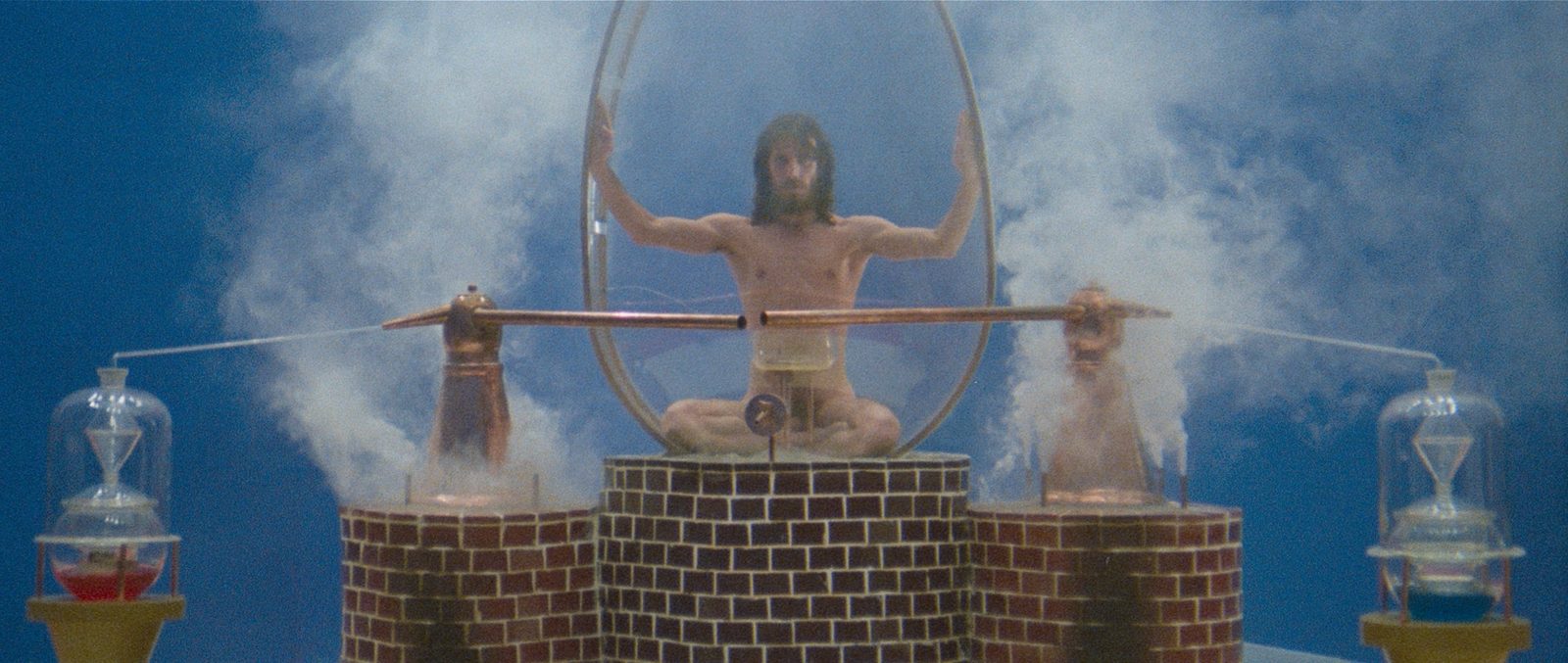
Director Alejandro Jodorowsky's The Holy Mountain (1973) follows an unnamed, Christ-like thief who wanders through a surreal, corrupt society marked by religious commercialism.
Guided by a powerful alchemist, the thief joins forces with seven corrupt, materialistic world leaders. The group undergoes bizarre spiritual rituals to purge their egos and divest themselves of worldly attachments, such as greed, vanity, and power. Together, they embark on a mystical pilgrimage to the Sacred Mountain, aiming to displace the immortal gods who secretly rule the universe and gain eternal enlightenment for themselves.
Throughout their grueling ascent, they are confronted by symbolic visions of their deepest fears and obsessions. In a shocking, meta-fictional twist ending, the alchemist breaks the fourth wall, commands the camera to pull back, and exposes the film crew and studio equipment. He then orders the disciples and the audience to leave the mountain, signaling that true, practical life awaits them in the real world.To see a breakdown of this psychedelic, counter-cultural cult classic's intense visual style and its deeper meaning
There is a scene in this movie, pictured above that seems to depict Urine Therapy in fast forward.
The Holy Mountain Official UK Restoration Trailer 4K | Captioned
Jodorowsky plays The Alchemist, a guru who guides a troupe of pilgrims on a quest to ascend the Holy Mountain in search of spiritual enlightenment.
Direct link:
https://www.youtube.com/watch?v=DSON8vHpxzY
The Sacred Mountain: Understanding Jodorowsky's Occult Ritual
Today we explore the hermetic and esoteric symbolism in Alejandro Jodorowsky's film "The Holy Mountain," a true occult ritual of psychomagic. We analyze key scenes and little-known details about its deeper meaning, providing a guide to understanding the significance of this cult film.
link:
https://www.youtube.com/watch?v=vAowJhNHLgE