
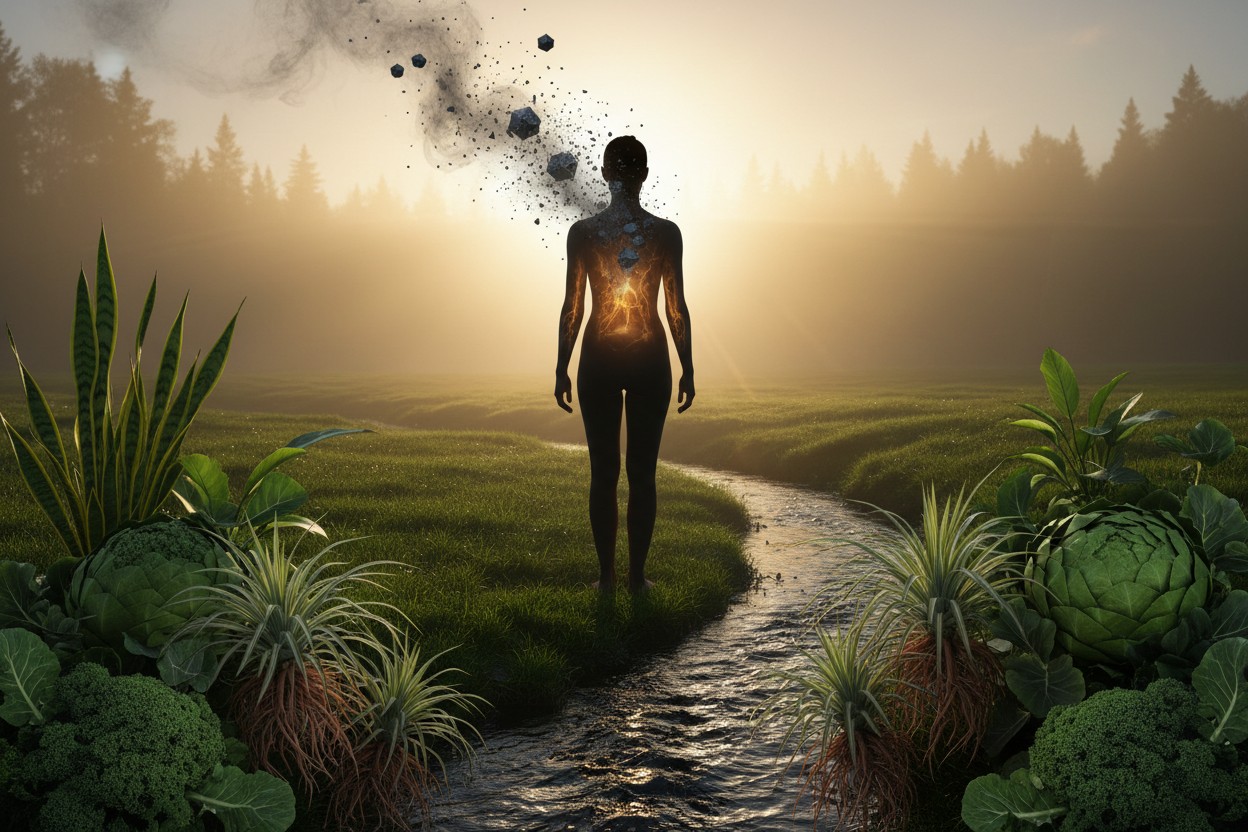
Title: The Water of Life: Reclaiming Health Through Nature’s Simplest Remedies
Subtitle: Reflections on Nutrition, Self-Healing, and the Body’s Innate Wisdom
As a man who has walked the path from chronic illness to robust vitality, I have come to see that true health is not found in the latest pharmaceutical marvel or expensive supplement but in returning to the fundamental laws of nature. For too long, we have been misled by a system that profits from sickness rather than prioritizing wellness. Drawing from the timeless observations in John W. Armstrong’s *Water of Life*, particularly chapters 18 through 20, I present this educational exploration of how wrong feeding breeds disease, how urine therapy offers a profound path to restoration, how we must critically examine entrenched medical dogmas, and how the human body remains a mysterious, self-correcting marvel. My intention is not to prescribe but to empower: each of us can observe, experiment responsibly, and reclaim agency over our well-being.
Subsection 1: Wrong Feeding – The Prime Cause of Disease
The foundation of disease, as Armstrong compellingly argued, lies in malnutrition—not necessarily from lack of calories, but from the absence of vital substances the body requires and the presence of harmful ones it does not. Scientific inquiries of his era, echoed in reports like *Britain’s Health*, highlighted that even abundant eating can leave individuals starved of protective elements such as vitamins and minerals. Conditions like scurvy, pellagra, and beriberi arise not solely from starvation but from diets stripped of essential nutrients. Tuberculosis rates surged in nations facing food shortages during the Great War, underscoring how dietary deficits weaken resistance.
In temperate zones like my own in British Columbia, I advocate for a balanced omnivorous approach suited to our climate and evolutionary heritage: quality meat, poultry, eggs, fish, fresh salads, steamed vegetables, whole wheat bread, seasonal fruits, brown rice, and moderate butter and honey. These provide the complete spectrum our bodies have adapted to utilize. What we must avoid are the denatured products of modern “civilization”—tinned foods, twice-cooked meals, white bread, white sugar, polished rice, and pasteurized milk. These are not neutral; they represent commercial priorities over nourishment. White sugar, stripped of its alkaline minerals, becomes acid-forming. Pasteurized milk loses much of its vitality, enabling stale product to be sold undetected while failing basic animal nutrition tests—calves die on it, rats fail to reproduce.
Personal idiosyncrasies matter. Climate, environment, and individual constitution dictate needs; an Eskimo’s diet differs vastly from a Brazilian’s. Some react violently to fish or eggs, yet tolerances can shift with age or improved health. Rabid vegetarianism, while idealistic, often fails when adopted suddenly by those habituated to omnivory, leading to imbalance. A well-planned vegetarian diet from infancy can succeed if truly balanced, but abrupt shifts ignore the body’s gradual adaptation. The core principle remains: disease stems from imbalance. Prevention demands regulated intake—neither excess nor deficiency—combined with occasional therapeutic fasting. In my experience, one substantial daily meal often suffices for maintenance once health is restored, demonstrating the body’s efficiency when properly supported.
This understanding shifts responsibility. Lack of money contributes to poor diets, but ignorance drives consumption of low-value foods. Education empowers us to choose wisely, prioritizing fresh, vital foods over processed convenience. By addressing root causes through diet, we reduce the terrain for illness far more effectively than symptom-focused interventions.
Subsection 2: Urine Therapy – Nature’s Perfect Medicine
Armstrong’s rediscovery of urine therapy stands as one of the most straightforward yet revolutionary approaches to healing. It costs nothing, requires no exotic ingredients, and leverages the body’s own wisdom. Far from a desperate measure, it is autogenous therapy—using what the body produces to rebuild itself.
In practice, this involves consuming one’s fresh urine (midstream) and applying it externally via rubs or compresses. Armstrong documented remarkable recoveries from supposedly incurable conditions through urine fasts, often lasting weeks, supported by full-body urine massages. The therapy is not disease-specific but health-specific; it supplies perfectly balanced, living nutrients, hormones, enzymes, and other factors tailored exactly to the individual’s needs at that moment. The body, in its intelligence, directs these elements where required for repair.
From my own practice and observations, urine therapy excels at resolving skin issues—chapped hands, blisters, stings, sores, dandruff, and more—when old urine is applied topically. Gargling fresh urine aids throat conditions. Daily moderate intake supports urinary flow and elimination. During fasting phases, it sustains the body while deep detoxification and regeneration occur. Survivors adrift at sea who recycled urine from the outset fared better than those waiting until desperation, countering fear-driven myths. The practice aligns with our earliest life experience: in the womb, the fetus develops bathed in and inhaling amniotic fluid, which is largely urine. This fluid promotes rapid, scarless healing, lung development, and growth—evidence that urine is not waste but a vital medium from the beginning.
Critics recoil at the idea, yet this aversion often stems from conditioning rather than evidence. Armstrong approached it pragmatically, reporting outcomes without over-theorizing the “why.” Modern extensions, such as stem cell presence in urine, hint at regenerative mechanisms, but the core value lies in observable results: restored vitality, resolved chronic issues, and self-sufficiency. It democratizes healing, accessible to rich and poor alike, bypassing commercial dependencies.
Subsection 3: Challenging Medical Orthodoxy and Commercial Interests
Armstrong exposed how laws and professional norms often protect profitable treatments over patient outcomes. Operations, radium, and serums generate revenue, while simple, unpatentable methods face skepticism or prohibition. Doctors themselves sometimes admit limitations privately—turning to unorthodox approaches for family members—yet public advocacy remains conservative. One surgeon confessed biochemistry as superior yet clung to old ways until public demand forced change.
This dynamic raises uncomfortable questions: Is the profession serving national welfare or its own interests? Patients frequently become casualties of etiquette, lucrative procedures, and resistance to lay discoveries. History shows lay contributions—like sanitation or hydropathy—faced hostility before acceptance. Pasteur, a chemist, not a physician, commercialized medicine profoundly. Urine therapy, like these, threatens no labor but challenges vested pharmaceutical and surgical interests.
I do not dismiss all conventional care. Doctors can supervise urine fasts, buffer family interference, and monitor progress. However, combining it with contrary drugs undermines its nature-cure essence. The therapy’s simplicity empowers individuals while inviting collaboration. Clinics supervised by open-minded physicians could make it widely available. Ultimately, patients must inform themselves; without knowledge of alternatives, demand for better options remains muted. Armstrong’s work equips us to ask for—or implement—self-directed healing responsibly.
Subsection 4: The Mysterious Human Body and Its Infinite Potential
The body remains profoundly mysterious. Exceptions abound: lifelong ailers reaching advanced age, or those defying predictions. Astrology, genetics, and environment offer partial lenses, but we know little. Urine therapy itself works in ways defying full mechanistic explanation—it selectively rebuilds deficient tissues. This humility before the unknown is essential. Armstrong avoided dogmatic “whys,” focusing on documented results.
Deeper inquiry reveals the body as far more than a meat machine. Questioning viral paradigms, heart-as-pump models, and reductionist cell theory leads to views of the body as an electromagnetic, liquid-crystal gel system—water in structured states held by biofields. Fetal circulation begins before a heartbeat; blood moves via capillary electromagnetic action. These observations dismantle simplistic hydraulics.
Chaos theory illuminates divine elegance: simple rules generate infinite uniqueness. Fractal patterns like the Koch snowflake or Menger sponge show finite boundaries containing infinite complexity. Every tree, every human—genetically classifiable yet utterly unique—embodies this. Our freedom of choice operates within this framework. The body acts as a compassionate buffer, self-correcting mistakes in diet, environment, and habit until critical thresholds. It grants time to learn, adapt, and align with natural law.
This perspective liberates. Mainstream narratives often serve profit or control, stacking lies about food, medicine, and physiology. By questioning everything—earth, cosmos, biology—we reclaim discernment. Artists harness infinite creativity from finite materials; so can we in health and life. Urine therapy exemplifies this: a simple, personal loop recycling what the body produces to sustain and heal, mirroring nature’s efficiency.
Conclusion
Health is our birthright and responsibility. By addressing nutritional deficits, embracing nature’s remedies like urine therapy, scrutinizing profit-driven orthodoxy, and marveling at the body’s self-healing mystery, we step into empowered living. Armstrong’s legacy reminds us that observation and courageous application trump blind authority. The water of life flows within us—literally and figuratively. Let us drink deeply, question boldly, and live vibrantly as co-creators of our wellness and a healthier world. The path is simple, the potential infinite. Start where you are, observe results, and share what you learn. True vitality awaits those willing to align with nature’s wisdom.