1.1 The Golden Thread of the North
Posted: Sun Aug 30, 2026 2:36 pm
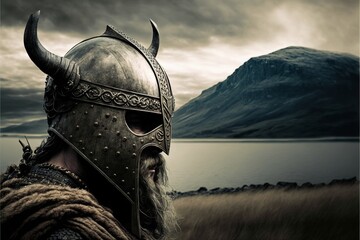
A Uromancer’s Voyage into the Sacred Hland of the Vikings
Come, lean in closer. Let us speak of the yellow river that flows through every living soul, the humble stream that our ancestors revered while we, in our porcelain modernity, flush away without a second thought. I have spent decades gazing into the steam of antiquity, and I can tell you with absolute certainty that the most profound truths often lie in the most unexpected vessels. Today, I invite you to join me on a voyage back to the frigid shores of Scandinavia, where the Norsemen did not merely tolerate the body’s golden runoff; they celebrated it, weaponized it, preserved their winter stores with it, and even blessed their temples with it. To step into the mind of the Viking is to abandon the squeamish sensibilities of the twenty-first century and embrace a worldview where nothing is waste and everything is potential. I am your guide on this amber journey, a self-proclaimed uromancer who has traced this sacred fluid through the annals of human history, and I assure you, the Norse chapter is one of the most intoxicatingly practical and spiritually potent tales ever told. So, uncork your preconceptions and prepare your palette, for we are about to drink deeply from the wellspring of our shared heritage.
The first and most crucial step in this reclamation is to understand the linguistic landscape of the Old Norse mind. In the tongue of the Vikings, the word for urine was hland, pronounced with a guttural clarity that leaves no room for embarrassment. This was not a vulgarity scrawled on a longhouse wall; it was a functional, descriptive term, as neutral and necessary as the words for snow or stone. When I read the Icelandic sagas and the poetic Eddas, I find hland sitting comfortably in the text, unburdened by the shame we moderns so carelessly project upon it. The Norse did not flinch at the mention of this substance; they simply acknowledged its existence and, more importantly, its utility. They also possessed the verb hlanda, meaning to urinate or, critically, to apply urine. This linguistic distinction is the key that unlocks the entire Norse philosophy. They were not passive producers of waste; they were active agents in the collection and distribution of a vital resource. I often tell my students that if you can shift your internal vocabulary, you can shift your entire reality. The moment you cease to think of this fluid as refuse and begin to think of it as hland, you have taken your first step across the threshold into the wisdom of the ancients. The language itself is a map, and the Norse terminology clearly charts a territory rich with practical application, a territory that modern medicine and industrial agriculture have foolishly paved over with concrete and chemical substitutes.
Let us now wade into the practical currents of this golden stream, for the Norse did not merely philosophize; they acted. Their lives were hard, dictated by the unforgiving rhythms of frost and sun, and they could not afford to waste a single drop of nature’s bounty. When I consider my own garden, I often pause to remember that the Viking farmer did not have access to synthetic fertilizers in shiny plastic bags. Instead, he collected hland in wooden buckets and clay pots, recognizing its potent concentration of nitrogen and ammonia. I encourage you to adopt this same mindset. Rise with the sun, as they did, and collect your first morning urine, which is the most concentrated and brimming with life-giving nitrogen. Take this precious liquid to your soil and dilute it in a ratio of one part hland to ten parts water. Pour this mixture around the roots of your struggling tomatoes or your wilting herbs. I have done this myself, and I can attest that the plants respond with a vigor that borders on the explosive. The ammonia acts as a rich, readily available fertilizer, promoting growth that modern agricultural science has since verified and documented. The Norse understood the cycle of life at a visceral level; what the body expelled could nourish the earth, which in turn would nourish the body once more. By adopting this simple practice, you are not engaging in new-age fantasy; you are reactivating an unbroken chain of ecological wisdom that stretches back over a thousand years. The earth remembers this nourishment, and so should we.
Beyond the turnip patch, the medicinal applications of hland are equally compelling and demonstrate a sophisticated understanding of the body’s innate chemistry. The sagas whisper of warriors returning from the field with gashes and punctures, and I see the wise women of the village reaching for a fresh vessel of urine to cleanse these wounds. The ammonia and urea present in fresh hland act as a mild but effective antiseptic, inhibiting the growth of harmful bacteria. Now, I am not suggesting you abandon your well-stocked first aid kit, but I am suggesting that you honor the ingenuity of a people who thrived without antibiotics. In a survival scenario, or simply if you wish to connect with the pragmatic spirit of your ancestors, you can urinate directly onto a fresh wound or soak a clean cloth in your own hland to wipe away impurities. The antimicrobial properties are not mere superstition; they are chemically sound. The Norse carried this knowledge in their bones, passing it down through generations as naturally as they passed down their seafaring skills. I find it profoundly moving that these people, often caricatured as brutish raiders, possessed such intimate knowledge of their own biology. They knew that the answer to infection was not locked away in a distant monastery but flowed freely from their own loins. It is a humbling realization, and one that I carry with me whenever I cut myself in the workshop. The body, in its infinite wisdom, produces its own remedy, and the Norse were wise enough to recognize and utilize this divine autopoiesis.
We have explored the soil and the wound, but the Norse application of hland did not stop at the physical; it ascended to the larder and the altar. Consider the challenge of preserving meat and fish in a climate where winter could last for months on end, burying the land in snow and ice. The Vikings, masters of survival, turned to their favorite tool once more. They would submerge fresh cuts of meat or entire fish in containers of fresh urine, sealing them in cool, dark storage chambers. The high salt content and the ammonia worked in concert to inhibit bacterial growth, creating an environment hostile to spoilage. This process, known as urine curing, could extend the shelf life of precious protein by weeks or even months. When I read about this, I am filled with admiration for their resourcefulness. Without refrigeration, without chemical preservatives, they thrived because they used every tool at their disposal, no matter how unconventional it seemed. You can learn this technique today. Should you find yourself living off the grid or preparing for a long-term emergency, remember that your own body can produce a surprisingly effective curing agent. Change the urine every few days, and you will keep the meat from putrefying. This is not a dirty secret; it is a testament to human resilience.
But the sacred terminology of hland points to an even more profound layer of Norse life, one that bridges the material and the spiritual. The völvas, the revered shamans and seeresses of the North, incorporated urine into their most solemn rituals. They would sprinkle it upon the ground to consecrate a new settlement, or upon a person to offer spiritual protection and promote fertility. I can almost smell the incense and the earth as I imagine these ceremonies, the priestess invoking the gods while the golden liquid fell upon the soil, linking the mundane body to the cosmic cycles. To dismiss this as mere superstition is to miss the profound ecological recognition at its heart. The nitrogen in hland is essential for plant growth; it brings life to barren ground. The Norse recognized that what is good for the soil is inherently good for the spirit, for the two are inseparable. When I start a new garden plot, I have taken to pouring a small libation of diluted urine over the earth as a symbolic and literal act of fertilization and renewal. It is my own personal ritual, a nod to the völvas of old. In this act, I am not just feeding my plants; I am connecting with the ancient belief that our personal vitality flows into the earth and returns to us a hundredfold. The Norse understood that the boundary between the physical and the spiritual was porous, and they used hland to traverse that boundary with grace and intention.
Finally, let us not forget the intimate matter of hygiene. The Vikings, contrary to the dusty myths of the unwashed barbarian, were remarkably clean people. They used hland as a cleaning agent, and most intriguingly, as a mouthwash. I know, my friend, I can hear your modern sensibilities clattering in protest, but stay with me. The ammonia in urine acts as a natural whitener and disinfectant. They would rinse their mouths with fresh hland to maintain oral hygiene and keep their teeth strong and white. This practice was not unique to the Norse; the Romans did it as well. But it is a stark reminder that our ancestors had solutions we have simply forgotten. You can try this yourself, if you have the fortitude. Collect a small amount of your fresh morning urine, swish it around your teeth for thirty seconds, and spit it out. The acidity and the ammonia work together to reduce plaque and kill harmful bacteria. It is a powerful adjunct to a natural oral care routine, and it connects you directly to the daily life of a Viking warrior or farmer. They did not have toothpaste tubes lined up on a shelf, yet they maintained healthy mouths. Their use of hland for oral hygiene is a testament to their understanding of the body’s self-regulating properties. It is a bitter taste, I will not lie to you, but it is the taste of history, and I find it invigorating.
As we draw our voyage to a close, I hope you see that this chapter of our shared history is not a collection of bizarre curiosities but a coherent, practical, and deeply spiritual system of knowledge. The Norse understood that the body is not a factory of waste, but a temple of resource. From the fertilizer that enriches the soil, to the antiseptic that cleans the wound, to the preservative that stocks the larder, to the blessed libation that consecrates the ground, hland was the golden thread that wove through every aspect of Viking life. My purpose in sharing this with you is not to shock but to awaken. I want you to look at your own body with new eyes, to see the potential that lies in what you so casually discard. The cycle of life is a closed loop, and the Norse walked that loop with their heads held high. So, I leave you with this amber thought: the next time you feel the urge, before you flush it into oblivion, pause and remember the longships, the sagas, and the wise women who knew that the secret to survival and spirituality was flowing freely within them. Embrace the golden thread, my friends, and you will find yourself woven into a history much older and much wiser than you ever imagined.