Bellow is the text from that wonderful link:
https://www.dogsnaturallymagazine.com/g ... -medicine/
Can Dogs Eat Garlic? The Surprising Truth
can dogs eat garlic question
Rita Hogan
Last Updated: June 8, 2023
Can dogs eat garlic? Well, if you look at any dog-centered poisonous plant list garlic is there, so many people think they can’t. But don’t fret when it comes to garlic for dogs! You have nothing to fear and everything to gain.
First, here’s why garlic is such a wonderful plant …
Garlic is high in inulin, amino acids, sulphur, zinc, potassium and phosphorus. It also contains vitamin A, C, calcium, magnesium, manganese, selenium, germanium and B-complex vitamins.
Garlic’s pungent energy warms the body. Pungent herbs move energy upwards and outwards to the body’s surface, improving circulation. Garlic also has an affinity for the lungs, large intestine, spleen and stomach.
Garlic helps detoxify the body. It supports beneficial bacteria in the digestive tract and eliminates harmful bacteria. I use it in the fall, winter and early spring as a detox and to balance out the digestive system.
As a liver enhancer, garlic breaks down wastes before they enter the bloodstream. It also helps your dog assimilate nutrients and eliminate wastes through the entire digestive tract.
Garlic is high in sulphur and fructans (inulin and oligofructose). Fructans can cause digestive upset in dogs suffering from leaky gut, inflammatory bowel disease and irritable bowel syndrome. When undigested fructans ferment in the small intestine, they cause bloating, gas and constipation. Your dog’s digestive system needs to be healthy before you feed her garlic.
6 Benefits Of Garlic For Dogs
Here are some ways garlic helps keep your dog healthy:
Prevents the formation of blood clots (anti-platelet)
Decreases cholesterol build-up (anti-cholesterolemic)
Widens blood vessels (vasodilator)
Helps prevent the formation of tumors (anti-tumor)
Stimulates the lymphatic system to remove wastes
Antibiotic, antifungal and antiparasitic
Garlic has other uses in addition to these health benefits:
Garlic As A Flea And Tick Repellent
Garlic may help you in the war on fleas and ticks if you feed it to your dogs during flea and tick season. It takes a couple of weeks for garlic to build up in your dog’s natural coat oil, so start feeding it before the bug season starts.
I don’t bathe my dogs too much during flea and tick season. One good soapy wash and you’ll have to start the build-up process again. To avoid this, use a Castile soap for bathing, or use cornstarch or Fuller’s Earth as a dry shampoo (but use these sparingly … you don’t want to dry out your dog’s coat too much).
When using garlic as a flea and tick repellent, feed each day for two weeks, then twice a week for maintenance.
Helps Fight Cancer
Garlic for dogs has shown promise with cancers of the colon, lung, stomach, and rectum. The compounds in garlic increase immunity and enhance natural killer cells. Natural killer cells destroy pathogenic bacteria and cancer cells.
While there are few clinical trials studying the anti-cancer effects of garlic, the National Cancer Institute reports that several population studies show an association between increased garlic intake and reduced risk of several types of cancer.
The Importance Of Fresh Raw Garlic
My clients always ask, “can I use the pre-chopped garlic in the jar?” or “How about the peeled whole clove garlic in the bag…it’s organic?” My answer is always NO.
When I say fresh, raw garlic I really mean fresh, raw, organically grown garlic … the kind that stays in the husk until 10 to 15 minutes before you feed your dog. And buy garlic that’s produced in the United States, preferably grown locally or in your own garden. Make sure you know where your garlic comes from. All garlic isn’t created equal.
Chinese garlic consistently tests positive for unsafe levels of arsenic, heavy metals and chlorine. Don’t risk your dog’s health by using it! So, again, ALWAYS use fresh, raw, organic garlic whenever you’re supplementing or feeding garlic for dogs. Nothing from a jar!
Garlic For Dogs- Image of fresh, organic garlic in the husk sitting next to a jar of minced garlic with a red X through it
Why is this important? It’s because you need active enzymes and whole plant synergy to get the true benefits of garlic.
Raw garlic contains an enzyme, alliinase. When you crush, mince or chop garlic, alliinase combines with alliin (an amino acid derivative) to create allicin. Allicin is the active medicinal ingredient in garlic that gives it those antibiotic, anti-cancer, antiviral and antioxidant properties.
When you feed raw garlic you’re getting highly effective whole plant medicine and nutrition. A plant’s effectiveness doesn’t come from the action of any single chemical. Garlic extracts don’t provide the hundreds of chemical constituents working together as they do in a plant. For example, the Kyolic aged garlic extract that you can buy at health food stores doesn’t contain any allicin.
Is Garlic Bad For Dogs?
Garlic is safe for your dog when you feed it in appropriate amounts. However, there are some cautions for pregnant dogs and some breeds like Akitas and Shiba Inus.
Pregnant Dogs
Always be cautious with any medicine or supplement for pregnant dogs. Consult your holistic veterinarian when feeding garlic to expectant mothers. Garlic also changes the taste of breast milk so avoid feeding it to nursing dogs.
Puppies
Don’t give garlic to puppies under six months. Puppies eight weeks or less don’t produce new red blood cells so never give them garlic. For puppies aged six months to a year, you can be cautious and feed half the regular dose.
Breed Specific Issues
Veterinary herbalist Susan Wynn warns against giving garlic to Akitas and Shiba Inus. These breeds are more sensitive to the hemolytic effects of oxidants such as N-propyl disulphide found in garlic. Consult your holistic vet if you have concerns about your dog’s breed related risks.
Drug Interactions
Garlic can interact with several types of medications. Here’s a short list of ones you need to be careful with:
Immune suppressants
Heart medications
Chemotherapy drugs
Blood thinners
Insulin
Antacids
High blood pressure drugs.
Don’t use garlic if your dog is on any of these drugs. Since garlic affects blood clotting don’t use it two weeks before any scheduled surgery.
Garlic And Dogs: The Confusion About Safety
When people ask, “can dogs eat garlic?” the answer tends to be no. Here’s an excerpt from Veterinary Pet Insurance’s website:
Excerpt from Veterinary Pet Insurance's website on garlic for dogs
The reason for this misleading information is that most research studies base their findings on the effects of garlic extracts, excessive dosages and unnatural delivery methods. Researchers rarely use fresh garlic for dogs because it’s difficult to measure variances in whole plant medicine. Evidence-based research doesn’t know what to do with the “food as medicine” paradigm.
One study, in particular, helped create garlic’s reputation as a food that can harm your dog. This 2000 study by K W Lee et al fed 5 grams of garlic per kilo per day to the dogs.
That’s an excessive amount. It means you’d need to feed about four full heads of garlic (or 60 cloves) to a 75 lb Golden Retriever, or 23 grams of garlic (6 to 8 cloves) to a 10 lb dog, before they’d experience any adverse effects.
Definitely don’t feed this much!
But another study in 2018 fed much smaller amounts – and for a longer period (12 weeks instead of 7 days). They gave only 90 mg per kilo per day, and concluded that “The long-term oral administration of AGE at a dose of 90 mg/kg/day for 12 weeks did not show any adverse effects in dogs.”
And they found another benefit: garlic upregulated the gene expressions of canine Nrf2 and Nrf2-regulated phase II antioxidant enzymes. Nrf2 is an anti-inflammatory signaling pathway.
Thiosulphate In Garlic
Garlic contains thiosulphate, the chemical responsible for causing Heinz body hemolytic anemia. This type of anemia causes oxidative damage to red blood cells that shortens their life. Red blood cells oxygenate tissues. Hemolytic anemia causes a decrease in these cells, which can lead to sickness and even death. Symptoms of hemolytic anemia include diarrhea, loss of appetite, lethargy, pale gums, rapid breathing and dark urine.
Want to avoid hemolytic anemia? Feed the right kind of garlic (by now you know that means fresh) and the correct dosage.
Proper dosages of raw garlic don’t contain high levels of thiosulphate. Bone marrow continually produces red blood cells. This means your dog would have to receive an excessive dose over a long period of time – or an extremely large dose – to cause death.
How Much Garlic Should You Give Your Dog?
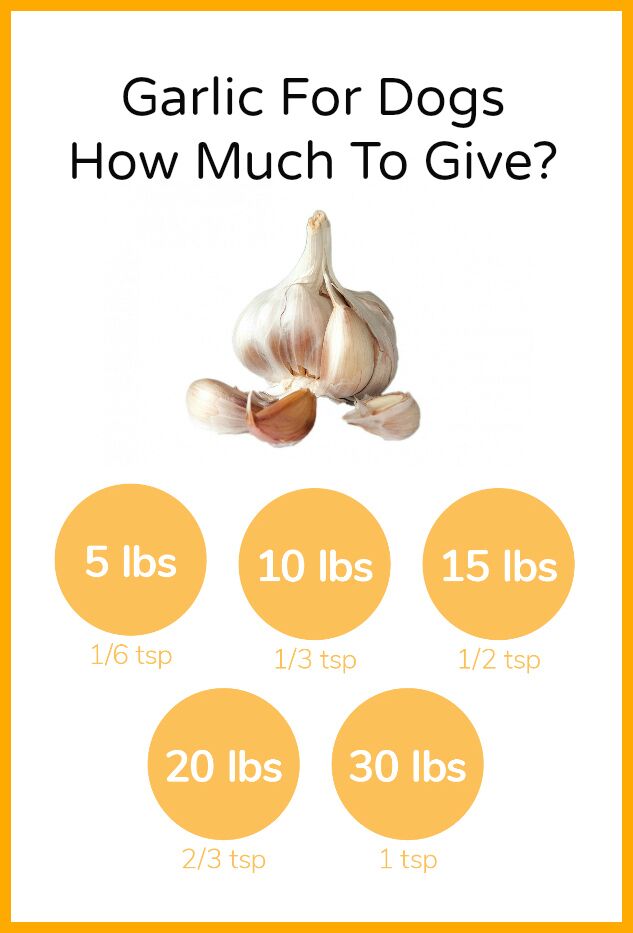
Using a level measuring spoon, feed the following amount per day, according to your dog’s weight:
5lbs: 1/6 tsp
10lbs: 1/3tsp
15 lbs: 1/2 tsp
20lbs: 2/3 tsp
30 lbs: 1 tsp
This applies to freshly chopped garlic. Here’s how to prepare the garlic. Mixing alliin and alliinase forms allicin, the active medicinal ingredient in garlic.
Peel the cloves then mince, chop or crush your fresh garlic and let it sit a couple of minutes before use.
Allicin degrades quickly, so use the garlic immediately after the “sitting” period for maximum benefit.
I measure and chop up my garlic and set my timer for 10 minutes. Measure out the right amount of garlic for your dog’s body weight and mix it into her food.
How much garlic to give dogs per weight
I use garlic in the fall, winter and early spring, while some people use it all year. When feeding garlic for health, I recommend feeding garlic every other week. Work with your holistic practitioner to find the most effective garlic supplementation schedule for your individual dog.